
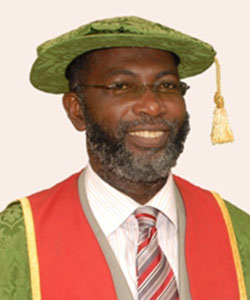
On February 19, 2013, Provosts, Deans, and Heads of Department of Kwame Nkrumah University of Science and Technology (KNUST) gathered at the Great Hall for a leadership workshop that, in retrospect, reads as a timely warning.
The presentation, “Roles of Heads and Deans in the Administration of the University,” was delivered by Mr. Kobby Yebo-Okrah, then Registrar of the University.
Although grounded in one institution’s experience, the issues raised resonate far beyond a single campus. More than a decade later, they remain largely unresolved across many universities, particularly in developing higher education systems.
A system under pressure
Universities today continue to grapple with persistent administrative weaknesses: inadequate staffing, run-down infrastructure, bureaucratic processes, poor information flow, and high administrative costs.
Together, these challenges overburden academic leaders and slow decision-making, limiting institutions’ ability to respond effectively to a rapidly changing global academic environment.
The result is a leadership culture increasingly consumed by routine administration, with limited space for strategic thinking, policy development, and academic innovation.
Rethinking leadership structures
A key concern is leadership continuity. Short or uncertain tenures restrict effective planning and weaken institutional memory. A review of terms of office, extending them to three years with a possible two-year renewal for professors, would allow university leaders the time needed to implement and consolidate reforms.
Equally important is how leaders are selected. The widespread use of rotational and ad hoc appointment systems for Directors, Deans, and Heads weakens accountability and long-term vision.
Moving toward open advertisement, competitive interviews, defined terms, and merit-based appointments would strengthen governance and refocus leadership on competence rather than hierarchy.
Strengthening capacity and support
Leadership authority must be matched with preparation. Mandatory training for new appointees, both internal and external, would improve administrative competence and policy coherence.
At the same time, income generation through consultancies, research commercialisation, and innovation-driven initiatives has become essential to address funding gaps and sustain academic quality.
Administratively, universities need a deliberate policy on staff recruitment, training, and development, supported by clear lines of communication.
The provision of Faculty Officers at the AR/SAR level would ease administrative pressure and allow Deans, Heads, and Directors to focus on academic leadership, research, and innovation rather than routine paperwork.
Reform or risk irrelevance
Higher education is evolving at speed. Universities that fail to adapt risk losing relevance, visibility, and credibility. While institutions like KNUST possess strong intellectual capital and technological potential, these strengths can only translate into global competitiveness through bold, pragmatic reforms.
By: Emmanuel Kwasi Debrah


